

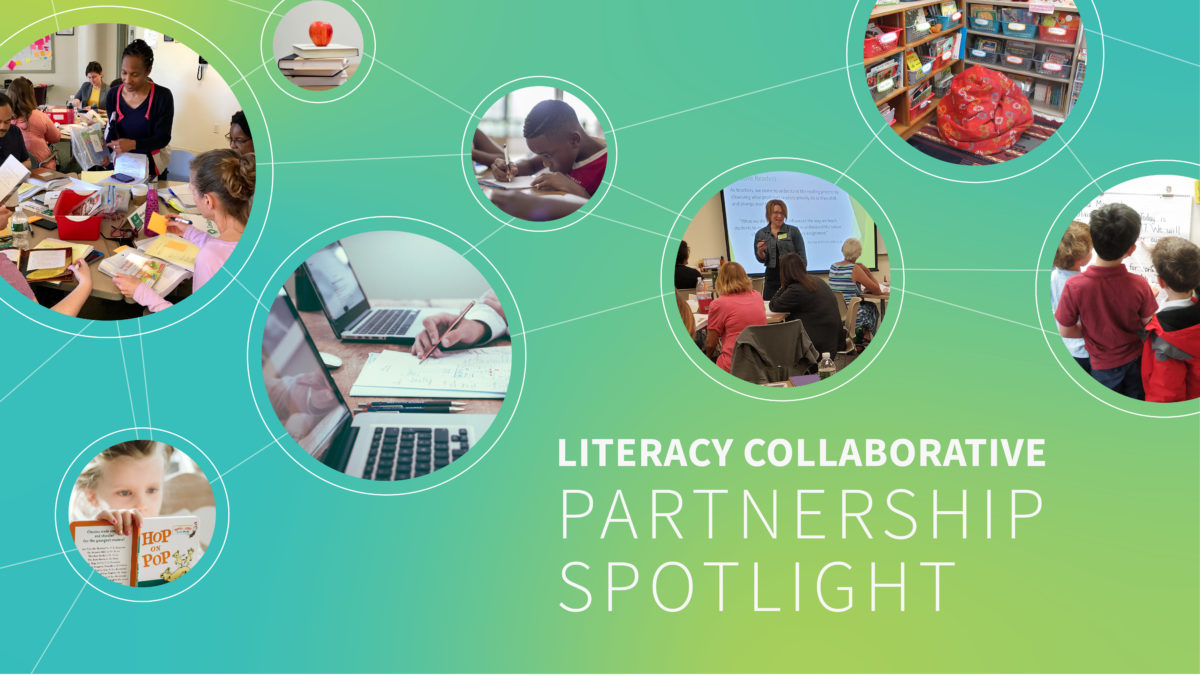
The Literacy Collaborative partnership builds school-wide professional capacity focused on improving the literacy outcomes for all children. What does this mean for a teacher, interventionist, or literacy coach/teacher leader who becomes trained through Literacy Collaborative?Literacy coaches “in-training” immerse themselves into an initial year of training to refine their literacy learning and teaching. As they remain affiliated with Literacy Collaborative, these educators continue to develop their practice through ongoing literacy professional development with their colleagues.Eugenia DeLucca shares her experiences as a Primary (K-2) Literacy Collaborative trained coach for Bay Shore Public Schools.
What parts of the Literacy Collaborative training had the most significant impact on you and your work or practice?
All of it! I wouldn’t be able to be a reflective teacher without it! The training helped me join together all aspects of the reading and writing process. Continuous training keeps it all refined and evolving. As I continue to teach alongside my colleagues, we can then have continuous dialogue around student improvement.
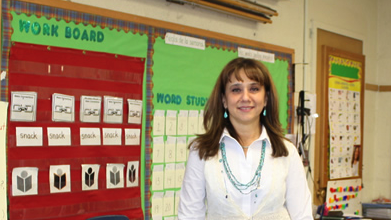
for Bay Shore Public Schools.
What is most rewarding about the work you do as a Literacy Collaborative teacher leader or coach?
There are so many rewards to being a coach. The first and foremost is the direct involvement with all students in the school. When sitting side by side with a teacher in their classroom, a coach gets the first-hand opportunity to get to know all the students in the building and help teachers create common opportunities for all to learn and improve in literacy instruction.
What is your advice for schools considering the Literacy Collaborative partnership?
My advice would be to carefully ask as many questions [to the Lesley faculty trainers] as possible. It takes time and work and it is easy to give up without giving it time. The [Literacy Collaborative] implementation plan is well designed and helps [the school] engage in a process that will have everlasting, positive teaching results.
Share the changes you have seen in your students.
I see students who are working hard everyday and no longer feel they are unable to read or write. When we first began that was a very obvious behavior students exhibited. Now, students are actively engaging whether they are struggling or not. All classrooms have engaging classroom libraries and the students are engaging in active literary lives and are becoming lifelong readers.
Interested in the Literacy Collaborative partnership?
Click here to learn more.