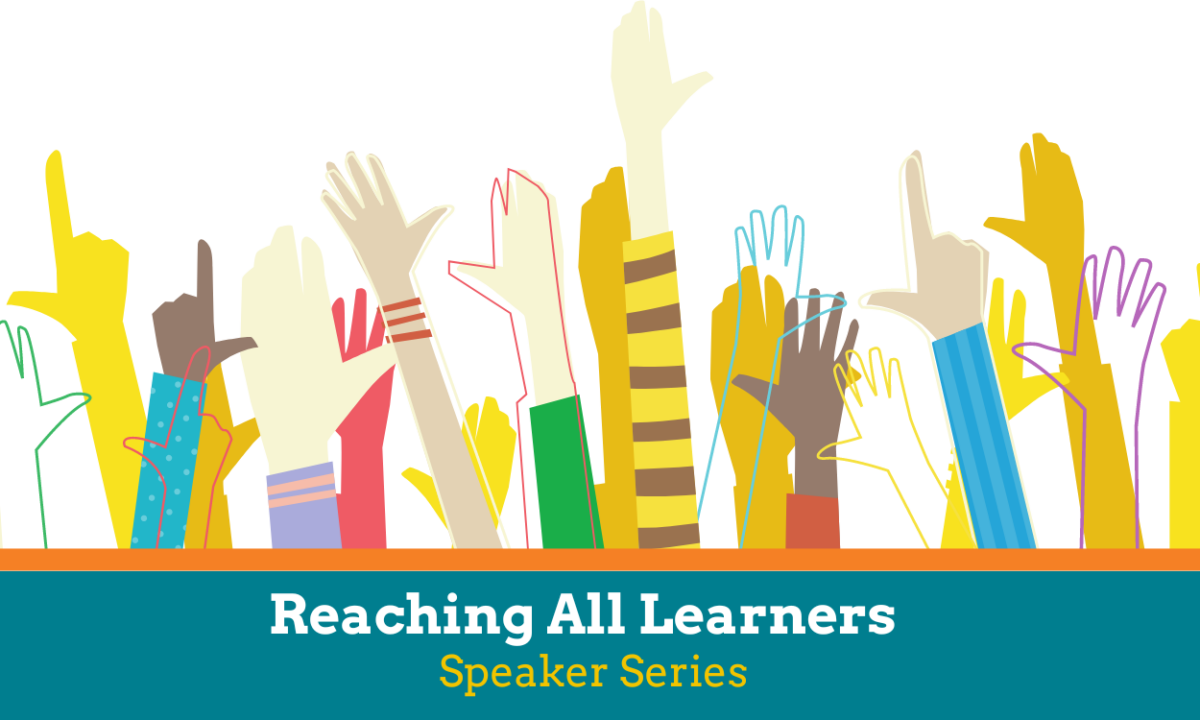
This time of year is always exciting—fresh notebooks and planners, new pens, and a whole new world of possibilities as an educator and a learner. One of the things I’m most excited about this school year is our new speaker series, Reaching All Learners. Featuring three nationally renowned educator-authors, this series is a beautiful opportunity to build toward the goal that each child grows up literate in our educational system by making sure every teacher has the tools they need to support literacy. There are many through-lines that connect the work of the speakers in this series, but for me some of the most salient are below.
Every child is a one-of-a-kind masterpiece.
Each classroom is home to children with a broad range of interests, needs, talents, and backgrounds. Children come in endless varieties, and like stars in the sky, each one shines in their own way. Author and educator Patricia Paugh will join us to explore a four-part instructional framework that builds on this rich diversity. While emphasizing the importance of students learning the letter/sound codes of English, this framework also emphasizes learning cultural, contextual, and linguistic codes that make up literacy learning. Paugh’s seminar will be followed by a workshop day taught by Lesley faculty where educators can dig deeply into asset-based instructional practices.
Collaborative relationships with caregivers are essential.
As teachers, it is imperative that we build strong relationships with all of our students and their caregivers. Building positive, collaborative relationships with caregivers helps align the supports students need to learn and grow. Nawal Qarooni will share a framework for collective care that reconsiders family engagement and communication, highlights the importance of developing trusting relationships with families and caregivers, and emphasizes the importance of working together toward shared goals for children’s development and education.
Reaching all learners requires all our ingenuity.
Theodore Roosevelt said, “Believe you can and you’re halfway there.” It doesn’t seem like bad advice. If we earnestly believe every single child can learn, then it is up to us to find the way, even when it may seem hard, and every day brings a fresh opportunity to keep trying. Melanie Meehan will help us expand our repertoire of ways to help writers who face challenges. Using tools like Artificial Intelligence, Melanie will walk us through this and other possibilities for helping students who struggle with writing.
It is imperative to extend our learning so we can extend theirs.
As educators, our learning is never complete. We have not yet encountered all the variation students may bring and those students will need to find their place in an ever-changing world. So, we too must continually evolve our thinking, deepen our skill set, and build an ever-growing fund of ingenuity from which we can withdraw.
Join us for the Reaching All Learners Speaker Series to learn more!