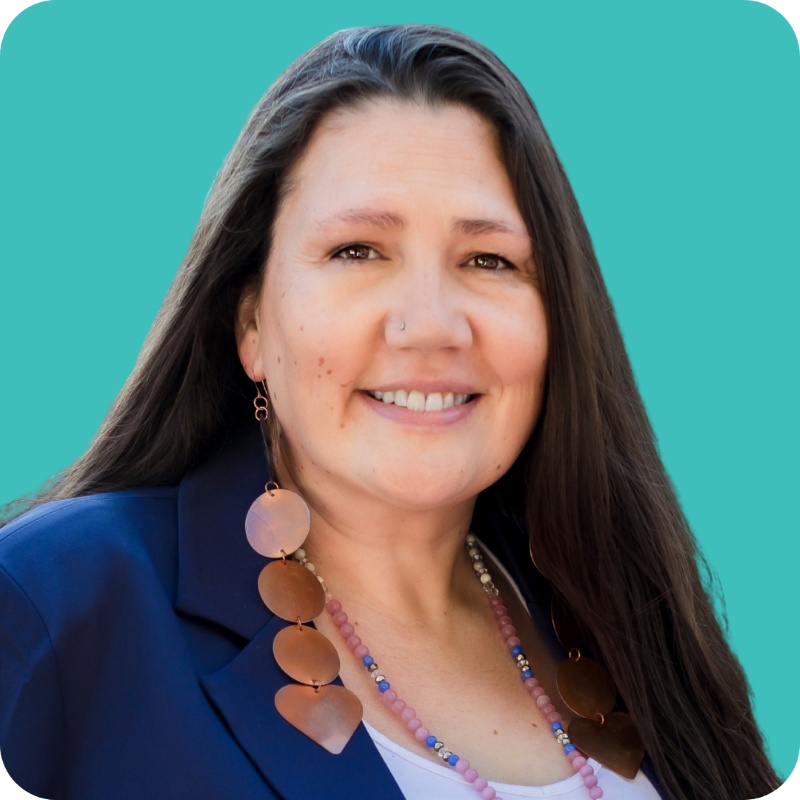
Every November, my inbox is inundated with requests — requests for lesson plans, book lists, classroom resources, guest speaking, assemblies. Educators are looking for ways to teach about Native Americans, often with urgency and good intentions.
November has become the time when Indigenous histories, cultures, and contributions are acknowledged in classrooms… or at least, when an attempt is made.
But this pattern raises an important question: What happens the other eleven months of the year?
When Indigenous content is confined to a single month or tied primarily to holidays like Thanksgiving, it can unintentionally reinforce the idea that Indigenous peoples exist only in the past, or only as a brief addition to the curriculum. The issue isn’t a lack of effort; it’s how Indigenous peoples and voices are framed and understood in the curriculum.
Indigenous communities are not historical footnotes. They are living, evolving, and vastly present. Our knowledge systems are not limited to a singular season, and our voices should not be either.
As educators, we have an opportunity to shift from occasional inclusion to sustained presence — integrating Indigenous perspectives into everyday literacy instruction in ways that are relevant, accurate, and ongoing.
Move from Inclusion to Presence
One of the most important shifts educators can make is moving from inclusion to presence.
Inclusion often looks like adding Indigenous content at specific times or in isolated ways. Presence means centering Indigenous voices as part of the ongoing foundations of classroom learning. It invites students to understand Indigenous peoples as contemporary communities with diverse experiences, histories, and perspectives.
This can begin with intentional instructional choices:
- Teach Indigenous voices year-round, not only during holidays, designated heritage months or isolated units.
- Use present-tense language that reflects Indigenous peoples as living contemporary communities.
- Center Indigenous-authored texts that express authentic voices and lived experiences.
- Name specific tribal nations and communities, rather than using broad or generic labels.
For example, rather than teaching a single lesson on “Native Americans,” consider how Indigenous perspectives from your area can be woven into units on storytelling, community, environment, and history throughout the year. Literacy instruction offers powerful opportunities for students to engage with voice, perspective, and narrative…and Indigenous texts and storytelling traditions are essential for that work to be comprehensive.
A Quick Lens for Evaluating Texts
One of the most immediate ways for educators to begin this work is through the texts we select for our classrooms and school libraries. However, it’s important to note that not all texts that include Indigenous characters or themes offer accurate, respectful or meaningful representation.
Taking time to critically evaluate texts helps ensure that what we bring into the classroom portrays Indigenous peoples as complex, contemporary, and diverse.
As you select and use texts, consider the following questions:
- Who is telling the story?
Is the author an enrolled citizen of a recognized tribe? If not, whose perspective and lived experience is being centered, and whose might be missing? - Are Indigenous peoples represented as contemporary?
Outside of historical content, does the text situate Indigenous communities only in the past, or does it reflect their ongoing presence today? - Are specific nations named?
Does the book identify particular tribal nations or communities, or does it rely on broad, generalized labels? - Does the text reinforce or challenge stereotypes?
Look for oversimplified portrayals, tokenism, or narratives that present Indigenous people in romanticized, primitive or static ways. - Whose knowledge is valued?
Does the text recognize Indigenous knowledge systems, storytelling traditions, and ways of knowing as valid and important?
This kind of evaluation is not about finding “perfect” texts, but about making intentional choices. It also opens opportunities for critical conversations with students, by inviting them to question, analyze, and think more in depth about whose voices are represented and how.
Through approaching texts with this lens, educators can move beyond surface-level inclusion and begin to build a classroom library, and a literacy experience, that integrates Indigenous presence in impactful and lasting ways.