

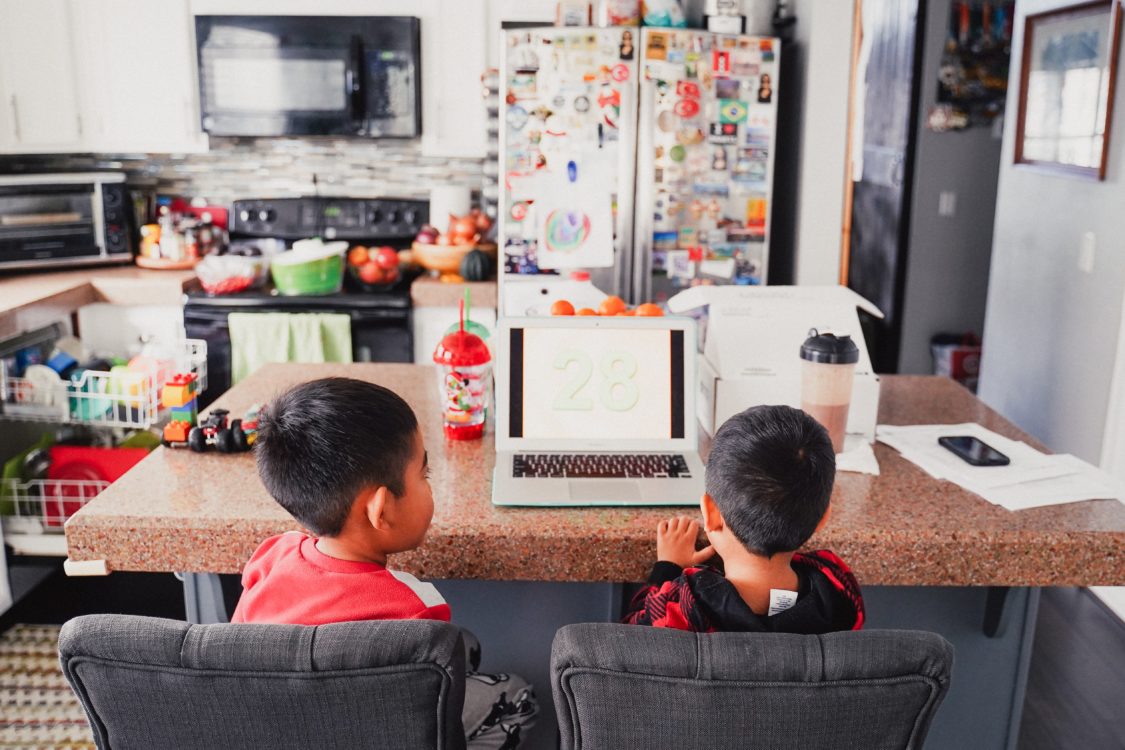

More than ever, it is crucial to work with parents and caregivers to support children’s learning. The younger children are, the greater the challenges become with facilitating learning online and the more likely it is that students will need assistance from an adult or older sibling. Communicating clearly and concisely about the supports parents and caregivers can provide to children is key.
Consider sharing some of the following types of information with parents at the beginning of the school year:
- Create a schedule of online learning and attendance expectations – explain when the class will meet in real time and outline the district’s attendance expectations.
- Provide guidance for helping their child learn how to log into a class website (Google classroom, Seesaw, Zoom, etc.). Working on a tablet often makes this easier than working on a computer for young children as they can usually just click on an app.
- Establish norms for online learning – these are important to set with both the students and with families. Honor both the needs of the children in the virtual classroom and the realities of the home setting. For example, it may be unrealistic to expect that the child’s home will be silent when meeting in real time so teach children how to mute their microphones when not talking.
- Briefly explain rationales behind the work that children are being asked to do and the instructional contexts that you use to teach. For example you might explain that in writers’ workshop we teach children how to select a topic to write about, rather than providing them with a sentence starter or assigning a topic. We do this so they learn how to generate ideas for writing that are meaningful and purposeful to them.
- Be sure to provide independent literacy activities that are meaningful, fun for children and incorporate as much reading, writing, word-solving and play-filled learning as possible.
- Provide guidance on how long activities should take. Parents will need suggested time lengths for many of the things that we ask children to do when they are working “offline.” Define what is a reasonable expectation for independent reading, making a book, and any other activity that you are asking children to do.
- Share ideas for getting texts into homes, both in print and in digital form. This might include a list of suggested tradebooks, websites with read alouds, online library resources, etc.
Once you have assessed the kinds of information you need to share with parents and caregivers, decide how you will share this information and which medium might be best for your families. Possibilities include a newsletter, audio-recording, video or a screencast like Loom or Screencastify in which you can capture your computer screen, voice, and face and then can share it in a video. A screencast may improve your efficiency because they often can be created faster than the time it takes you to write an email. It might also make sense to create a series of videos or screencasts for parents and caregivers to introduce new information as needed.