

By now the 2024 NAEP results are well known: reading scores declined nationally in both 4th and 8th grades compared to 2022 with gaps growing ever larger between higher- and lower-performing students. And now reading experts have turned their attention from emphasizing the necessity of teaching foundational skills – which we all know is essential – to debating whether building knowledge or comprehension strategies is the best way to teach children to comprehend. With so much back and forth, it can be difficult to know where to focus efforts to improve reading achievement.
What is a school leader to think? What’s a school leader to do?
Teaching children to think critically, analytically, and deeply about texts is no easy endeavor. To support teachers in moving beyond surface-level discussion of texts, take some time to observe teaching in action. As you watch, note how teachers are facilitating instruction aimed at comprehension.
What should you listen for when observing text-based comprehension work in the classroom? Below are several suggestions to help you sharpen your lens on comprehension instruction.
Questions to Ponder as You Observe:
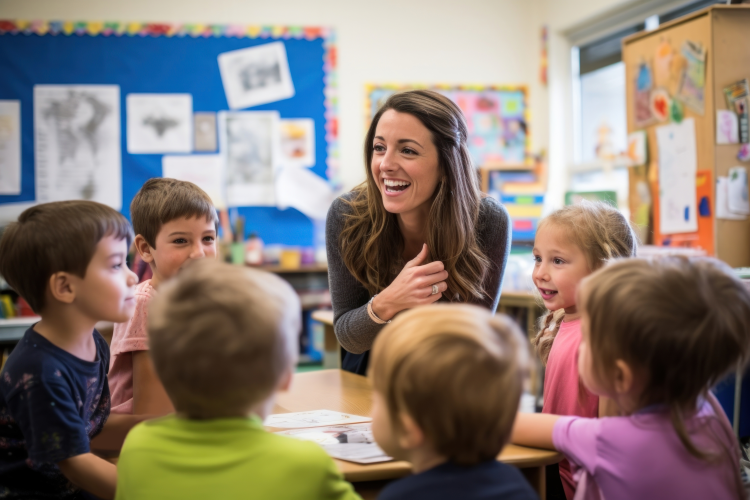
1. Does the teacher engage students in meaningful conversation? It’s important to notice if the teacher is using prompts to facilitate a discussion about a text. When children have opportunities to share their thoughts, reactions to, and questions about a text, it can very well lead to new learning and deeper understanding of text because they are hearing others’ perspectives and insights. It can also strengthen children’s identities as capable learners.
Sample Language You Might Hear:
- Who wants to get us started?
- Let’s think together about ___________.
- What does this book make you think about?
- What surprised you in this book?
2. Are you noticing a pattern in the discourse? Is the teacher engaging the children in a conversation or are the teacher’s questions more focused on testing for understanding? Way back in 1988, Harvard professor, Courtney Cazden, coined the term I-R-E to represent the default pattern of many classroom interactions – Initiate, Respond, Evaluate. This pattern may still be alive and well. When teachers ask questions, elicit responses, and then evaluate them, it can signal that they hold the answers and are simply checking for students’ understanding. As you observe, it is helpful to note if this pattern of questioning is emerging.
3. How does the teacher encourage children to build on one another’s thinking? First and foremost, teachers must listen carefully for evidence of students’ thinking. Then they need to support children in listening to one another so they can build on one another’s ideas.
Sample Language That Encourages Students to Build on Thinking:
- Who can add on to that idea?
- ________ just shared ____________. What do others think about that?
- Does anyone see it another way?
4. What kinds of thinking is the teacher prompting for? In a recent study that focused on the use of “High Quality Instructional Materials” and their impact on students’ comprehension, the researchers found several instructional practices that supported more robust comprehension. One important finding was that questioning techniques and “instructional practices must be oriented toward a big idea about a meaning of the whole text” (Reynolds et al., 2025). Questions that prompted students to use textual evidence to support their claims led to deeper comprehension when they were oriented toward the big idea(s) in the text. It was also found that it is effective for teachers to model their own thinking and to support students in drawing upon their prior knowledge to support comprehension of a text. This involved supporting students in making connections and inferences between textual information and students’ prior knowledge.
Also of note, the study cautioned that when teachers themselves do not understand the full meaning of their curricular texts, they may very well fall back on surface-level goals focused on literal understanding.
As you observe in classrooms, record the prompts and questions teachers ask of the students. To save time and accurately capture the conversation, consider using ChatGPT or other AI tool to scribe the lesson. After observing, analyze the kinds of thinking that the teacher called for and note any patterns emerging.
5. Who’s answering the questions? Recently, my colleagues and I were invited to visit classrooms in a local school during literacy instruction. In several of the rooms, we noted instances where a teacher would pose a question to her students. Then, when either there was no response or the teacher was not satisfied with the student responses given, she answered her own question. Often, the teachers were unaware of their behavior. The old adage, “The one who does the talking is doing the thinking,” was applicable in these scenarios. There can be many reasons for why teachers are answering their own questions and often teachers are unaware of this behavior.
If you note this behavior, it can be very helpful to share your observations with the teacher. Then reflect together on reasons why this is occurring. Oftentimes, it has to do with text selection.
In other scenarios, you might notice that only a few children are truly engaging in the discussion. Note the number of children who do the talking and how frequently they are called upon to do so. Again, teachers may be unaware of this pattern of response or may be unsure of how to encourage other students to share their ideas.
6. Does the teacher provide wait time and/or opportunities to rehearse thinking? As you observe, notice the length of wait time that the teacher provides for children to think about the question or prompt posed. When teachers provide more wait time, thinking often is deepened.
Turn and Talks where children share their thinking with a partner or small group are a powerful and efficient way to provide space and time for all children to share their thinking and engage in conversation. For multilingual learners and children more reticent to speak, the turn and talk provides a time to rehearse their language and can feel safer than speaking in front of the entire class.
Next Steps to Support Deeper Comprehension
Follow up on your classroom observations by meeting with teachers to share your feedback and work together to set clear goals for growth. Then consider how you and your colleagues can build on existing strengths to shape professional learning that deepens students’ talk about texts and comprehension.
You may also want to share this blog with your teacher colleagues so they can personally reflect on these six reflection questions.
Looking for professional learning designed specifically for your team delivered at your school? Our expert trainers will partner with you to design a variety of learning opportunities customized to your school’s goals.
References:
Cazden, C. (2001). Classroom discourse: The language of teaching and learning. Heinemann.
Fountas, I.C., & Pinnell, G.S. (2022). Leading for literacy: What every school leader needs to know. Heinemann.
Fountas, I.C., & Pinnell, G.S. (2012). Prompting guide part 2 for comprehension: Thinking, talking, and writing. Heinemann.
National Assessment Governing Board. (2025). 10 takeaways from the 2024 NAEP results. https://www.nagb.gov/powered-by-naep/the-2024-nations-report-card/10-takeaways-from-2024-naep-results.html
Reynolds, D., Rutherford-Quach, S., Cassidy, L., Jennerjohn, A., & Woodworth, K. (2025). Beyond the surface: Leveraging high-quality instructional materials for robust reading comprehension [Learning brief]. SRI. https://www.sri.com/publication/education-learning-pubs/beyond-the-surface-leveraging-high-quality-instructional-materials-for-robust-reading-comprehension/