
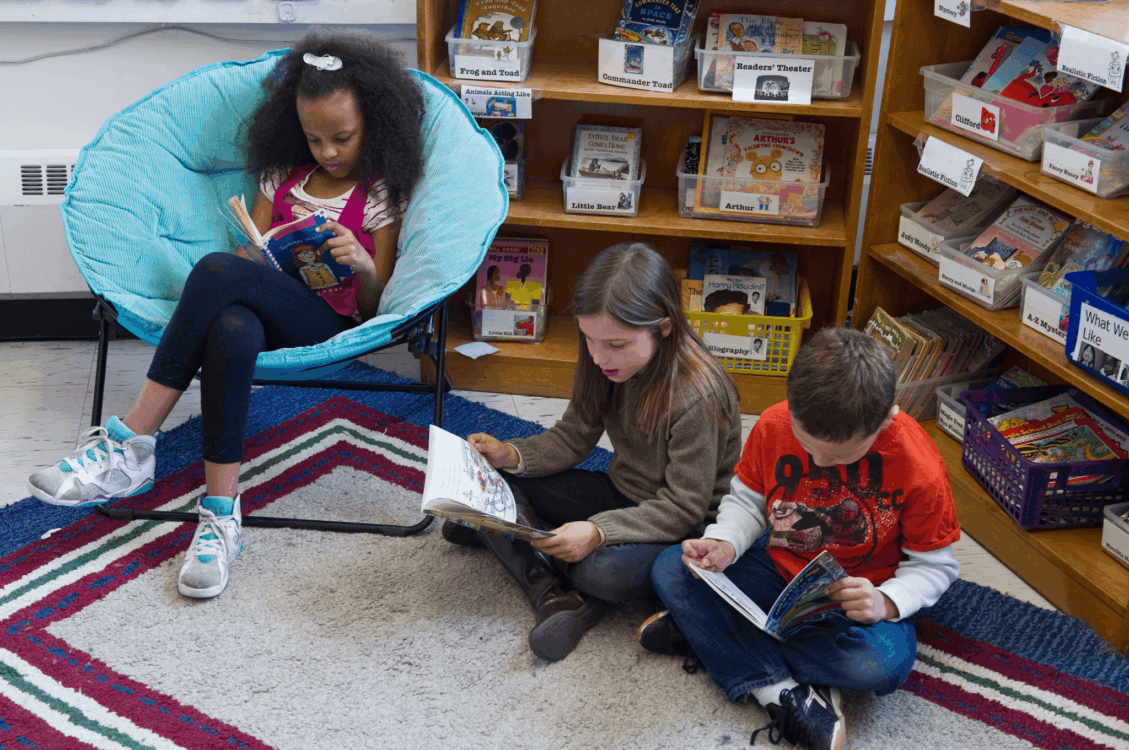

It’s 3:10 in the afternoon. Do you know how much reading the students in your school have done today? Are you concerned time spent with eyes on print might not be much?
Recently, several administrators and classroom teachers from a variety of districts shared how little time there is in their school day for students to read independently. How will students become proficient readers if they don’t read authentic, interesting books?
The idea that kids aren’t reading as much anymore isn’t just a hunch. Research shows the amount of time that students spend reading is consistently decreasing. According to the U.S. Department of Education’s National Center for Education Statistics (NCES), the number of students who report reading for pleasure on the National Assessment of Educational Progress (NAEP), has steadily decreased since 2012 for both 9 and 13 year olds.
Students Reporting They Read for Fun “Almost Every Day” on NAEP Survey
| 2012 | 2020 | 2022-23 | |
|---|---|---|---|
| 9 year olds | 53% | 42% | 39% |
| 13 year olds | 27% | 17% | 14% |
Perhaps even more discouraging is the statistic that 16% of 9-year-olds reported in 2022 that they “never or hardly ever read for fun”!
In an era with a laser-focus on evidence-based practices in literacy, research related to the importance of reading volume is ironically being overlooked and undervalued. Studies clearly show the volume of reading positively effects reading fluency, word recognition skills, and a favorable disposition toward reading. And the amount of reading done positively correlates with student scores on standardized tests (Miller & Moss, 2013).
Hope is not lost! As a school leader, you can take several steps to ensure that children are reading every day in every classroom and advocate for increased reading outside of school.
What You Can Do as a School Leader
1. Prioritize and communicate the need for teachers to include daily independent reading in their schedules. The “just right” amount of time for reading depends on reader proficiency and stamina. Less may be more in the beginning as teachers support students in developing their ability to sustain reading over time. It is critical, however, that some time is set aside for this vital activity every day.
2. Provide professional learning to ensure teachers can effectively support independent reading time. Don’t assume that all teachers will know how to make the most of independent reading time in the classroom. Independent reading is purposeful instruction time that requires ongoing teaching to be effective. It is not just a matter of telling children to choose a book and read which often results in students wasting time. To make independent reading time effective, it needs to be paired with specific lessons, conferencing with individuals, and ongoing monitoring of students’ reading.
Teachers will profit from opportunities to learn more about how to: foster a classroom community of readers; build student interest in a variety of texts through book talks; support children with selecting books from the classroom library; monitor and assess students’ reading; and how to confer and guide individual children with their independent reading.
3. Don’t leave classroom library curation to the teachers alone. For children to find material they want to read, they need access to many books. In too many schools and districts, the responsibility for building a classroom library is left to individual teachers. This practice often leads to inequities across classrooms. New teachers have not had the time or resources to build a robust classroom library and others may rely on personal collections that have become old or outdated. Prioritize securing funds for the school and classroom libraries to make sure that all children have equal access to engaging and appropriate reading material.
4. Review the guidance from your core literacy program on providing opportunities for students to read independently. Several research studies over the past 15 years have examined the amount of text provided daily in commercial reading programs and it is often sparse. In a review of recent research on reading volume and reading achievement, Allington and Franzen (2021) wrote, “Some of the core reading programs available today would supply texts for reading for as little as 11% of the time allocated for a 90-minute reading lesson” (p.2). Researchers have found, on average, that core reading programs offer seven to 15 minutes of actual reading activity. I am not suggesting you abandon your core literacy program, but you will want to pay close attention to the amount of material and time allocated daily for students to actually read books.
There is power in providing students with time to immerse themselves in reading a good book! Teachers need to be intentional with the ways they facilitate independent reading, but the payoff can be huge for our students. The research is clear, independent reading implemented systemically has a huge return on investment for students.
Call to Action
Want to learn more about how independent reading fits into a comprehensive literacy model? Join us and other school leaders for our summer session of Leading for Literacy on July 14 – 17.
References
Allington, R.L., & McGill-Franzen, A.M. (2021). Reading volume and reading achievement: A review of recent research. Reading Research Quarterly, 0(0), 1 – 8.
Iyengar, S. (2024, October 3). Federal data on reading for pleasure: All signs show a slump. National Endowment for the Arts.
https://www.arts.gov/stories/blog/2024/federal-data-reading-pleasure-all-signs-show-slump
Miller, D. & Moss, B. (2013). No more independent reading without support. Heinemann.