
Even though a growing body of research indicates that many students enjoy reading nonfiction as much as or more than fiction, many teachers are hesitant to read nonfiction aloud. They ask me the same three questions over and over:
- How do I locate appropriate nonfiction titles?
- How do I read nonfiction aloud in a way that engages students?
- How do I encourage and facilitate student responses to a nonfiction read aloud?
To answer these questions, I created a presentation called “Tips & Tools for Nonfiction Read Alouds,” and I’m excited to be offering it as a live virtual presentation at this year’s Literacy for All Conference on Tuesday, October 19 from 5:00pm – 6:00pm (ET).
Today, I’m going to share one tip.
Reading nonfiction picture books aloud can be a challenge because they often contain significantly more words than fiction picture books. And even if the art is enticing and the writing is engaging and the information is fascinating, a picture book read aloud shouldn’t last more than 5 to 7 minutes.
When I plan a nonfiction read aloud, I ask myself lots of questions.
- What parts of the book should I highlight?
- Should I skip over anything?
- Would additional visuals or props improve the audience’s experience?
- Would using a document camera help?
Sometimes I make the right decisions on the first try. But other times, the kids surprise me, and I make adjustments as I go along.
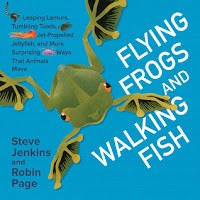
In a book like Flying Frogs and Walking Fish: Leaping Lemurs, Tumbling Toads, Jet-Propelled Jellyfish, and More Surprising Ways that Animals Move by Steve Jenkins and Robin Page, some double-page spreads have six animal examples. Depending on the age of your audience, that may be too much. But it’s fine to let a student volunteer choose just one example for you to share with the class. Then, if children want to know more, they can read the rest of the examples themselves later.
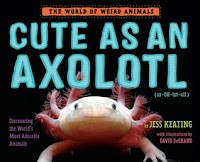
In a book like Cute as an Axolotl: Discovering the World’s Most Adorable Animals by Jess Keating, which has a lot of information on each page, you can share just a couple of spreads as a read aloud. As with Flying Frogs and Walking Fish, you can encourage interested students to read the rest of the book on their own.
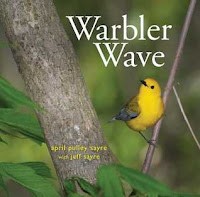
Books like Warbler Wave by April Pulley Sayre have a short, poetic main text with lots of interesting extra information in the backmatter. Feel free to take your time savoring the gorgeous language and stunning photographs with students. Then, as time permits, share just a few sections of the backmatter.
When it comes to nonfiction read alouds, there’s no rule that says you have to read every single word!
I hope to see you at the Literacy for All Conference on October 19 for more tips and tools PLUS a list of 50 nonfiction books that make great read alouds.
About the Author
Melissa Stewart has written more than 180 science books for children, including her newest title Fourteen Monkeys: A Rain Forest Rhyme, illustrated by Steve Jenkins. She co-wrote 5 Kinds of Nonfiction: Enriching Reading and Writing Instruction with Children’s Books, edited the anthology Nonfiction Writers Dig Deep: 50 Award-winning Authors Share the Secret of Engaging Writing, and maintains the award-winning blog Info-licious Inspiration. Melissa’s highly-regarded website features a rich array of nonfiction writing resources.