
Visionary Leadership for California Educators
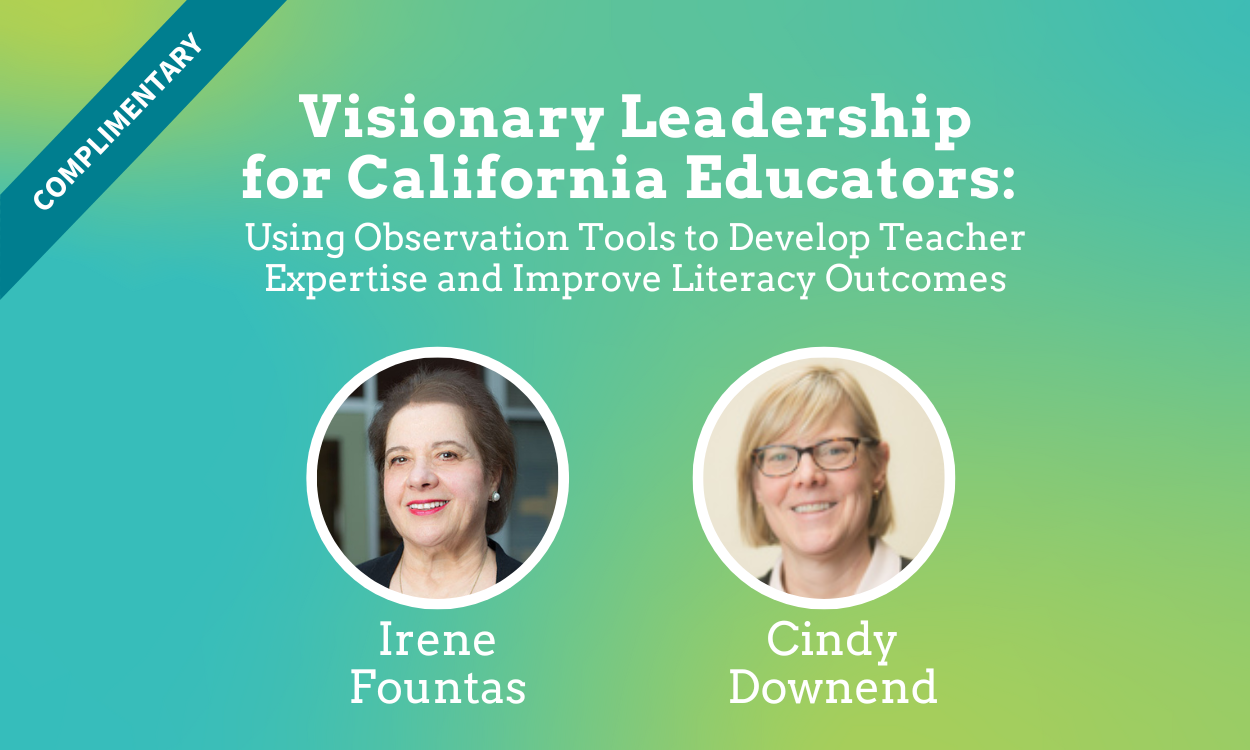
Using Observation Tools to Develop Teacher Expertise and Improve Literacy Outcomes
- District & School Leaders
- Literacy Coaches & Teacher Leaders
We invite school leaders based in California to join us for this 1-hour webinar with Irene Fountas and Cindy Downend from the Center for Reading Recovery & Literacy Collaborative at Lesley University in Cambridge, Massachusetts.
Invest one hour and you will understand how to use observation tools to refresh and reimagine the professional learning possibilities in your school. Using one tool as an example (Interactive Read Aloud), you will be able to envision the role it can play in promoting curriculum coherence, educator collaboration, continuous professional learning and improved literacy instruction.
This webinar will be live at 9:30–10:30am (PST) and 1:30–2:30pm (PST). Please select the webinar you plan to attend upon registration.
Interested in professional learning at your school or district? Schedule a meeting with one of our faculty trainers.
Featured Blogs

When Someone Sees You as a Writer
Discover how to put the writer, not the writing, at the center of writing conferences for students to see themselves as writers.

What Coaches Need to Succeed: A Research-Informed Model for Supporting Coaches
Coaching can be one of the most rewarding roles in a school, but it can also be isolating. Coaches occupy a unique space: they are not administrators, but their role also differs significantly from that of classroom teachers and specialists. Here are 5 things coaches need to thrive.

Better Together: The Case for Cluster Coaching
Discover how cluster coaching helps educators learn together, build confidence, and strengthen student outcomes.