
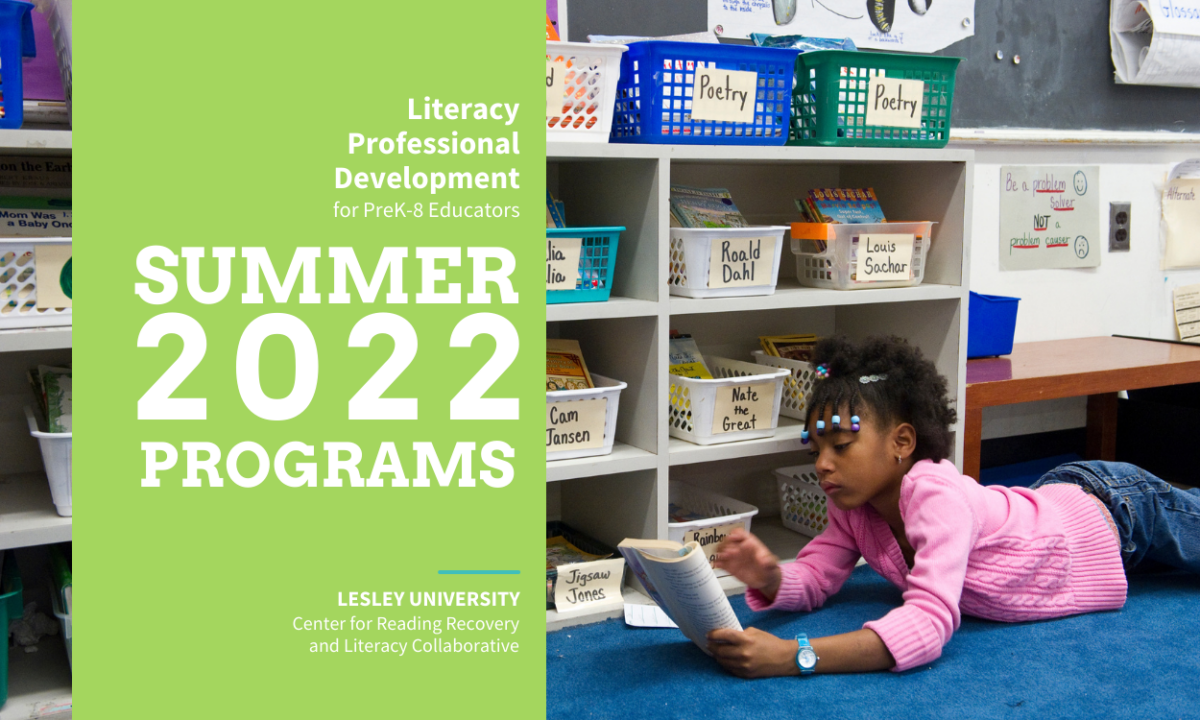

Refresh and re-energize your thinking by attending summer professional development and courses through Lesley University’s Center for Reading Recovery and Literacy Collaborative. Under the direction of Irene Fountas, the Center is a nationally recognized leader in literacy professional development for educators working with students in grades PreK-8.
Our faculty trainers provide professional learning that will renew your enthusiasm for teaching, inspire fresh ideas, and leave you ready to address essential understandings of reading and writing instruction.
Begin the new school year prepared to help every student become a more confident and engaged learner!
JUNE 2022
- NEW! Joyful Beginnings in PreK & Kindergarten: Play Based Language & Literacy Learning PreK-K
June 28-29, 2022
JULY 2022
- Leading for Literacy: What Every School Leader Needs to Know Grades K-6
July 11-14, 2022
- Bringing Antibias and Antiracist Practices to Life in Classrooms and School Communities PreK-8
July 18-21, 2022 (Summer Literacy Institute with Liz Kleinrock & CRRLC Trainers)
- Guided Reading: Responsive Teaching Grades K-2
July 25-29, 2022
- Leveled Literacy Intervention Grades K-2
July 26-28 & October 19-21, 2022 (revised dates)
- Leveled Literacy Intervention Grades 3-8
July 27-29 & October 4-6, 2022
AUGUST 2022
- Word Study: Teaching Phonics, Vocabulary, and Spelling Grades 3-8
August 1-5, 2022
- NEW! Leading for Literacy Part Two: Moving Forward Together for Continued Improvement in Your Schools Grades K-6
August 2-3, 2022
- Word Study: Teaching Phonics, Vocabulary, and Spelling Grades K-3
August 8-12, 2022
- Guided Reading: Responsive Teaching Grades 3-8
August 15-19, 2022
- Introduction to Fountas & Pinnell Classroom™ Grades PreK-6
August 22-23, 2022
SEPTEMBER & OCTOBER 2022
- Fountas & Pinnell Benchmark Assessment Systems 1 & 2 Seminar Grades K-8
September 19-20, 2022
- Leveled Literacy Intervention Grades K-2
September 21-23 & November 1-3, 2022
- Leveled Literacy Intervention Grades 3-8
September 21-23 & November 1-3, 2022
- Effective Literacy Coach Grades K-8
October 12-14, 2022, November 19 – December 2, 2022, February 13-15, 2023 (revised dates)
SUMMER LITERACY INSTITUTE
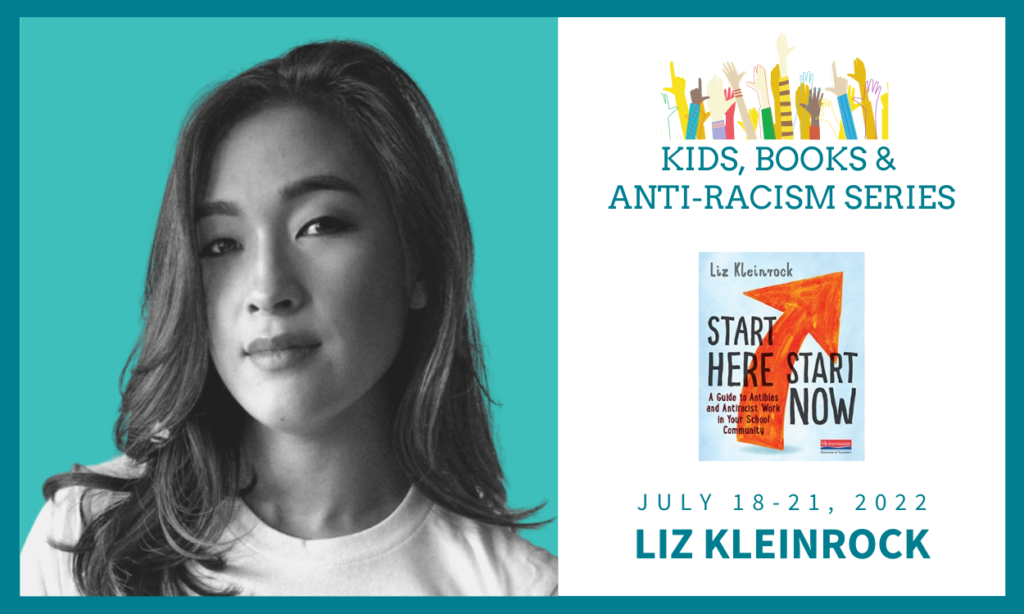
Bringing Antibias and Antiracist Practices to Life in Classrooms and School Communities PreK-8
July 18-21, 2022 (Summer Literacy Institute with Liz Kleinrock & CRRLC Trainers)
In this four-day Summer Literacy Institute, re-energize your teaching by exploring inquiry as a student-centered and anti-bias approach to engage learners.
Look at strategies to concretize anti-bias and anti-racist ideas into curriculum, lesson design, and building relationships with students and caregivers.