

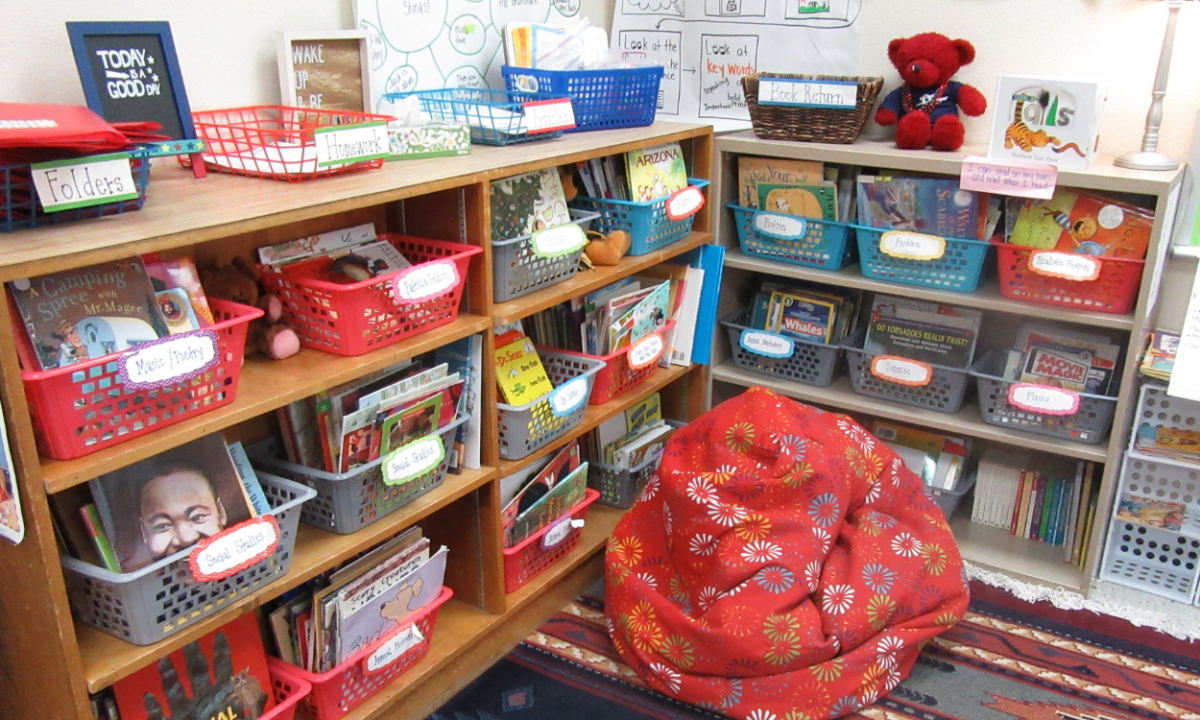

With the start of school right around the corner, you may be considering (or reconsidering) your physical space as you prepare to welcome a new community of readers and writers into the classroom. The classroom library can become the heart of the classroom. Here are a few tips to optimize your students’ engagement and ease in choosing books.
Make it Appealing
You walk right past the bruised fruit at the grocery store, so don’t let the classroom library be rotten produce! Use the ideas below or use a local bookstore for inspiration to make your library attractive.
- Organize books in bins on your shelves so that children can easily see the covers.
- Create attractive displays of books for different genres or topics that you can rotate weekly or monthly.
- Make a space to display books that you and your students decide to use for book talks.
- Add ambiance with consistent and calming color pallets, lamps, plants, and comfortable seating, which could be as simple as pillows, beanbag chairs, or carpet squares.
Consider How Books Will be Organized
Choice plays a significant role in elevating engagement. Organize your classroom library in a way that invites students to make their own decisions about what they read during independent reading times. Children need opportunities to read and interact with texts of various levels across a day and week. During independent reading time students need to be in control of book choice. It is best to organize classroom library books by genre or topic, not by level. Be creative! Make space for books you have previously shared with the class through interactive read aloud or shared reading. You may also want to consult with your students. Children may surprise you with their own innovative ways to sort the books into categories. This will help them feel a collective sense of ownership and responsibility for the library.
Variety is the Spice of Life!
Life is more interesting when it includes a lot of different experiences and the same is true for classroom libraries. Aim to provide hundreds of books in your classroom library. You may need to collaborate with colleagues, school librarians, and public libraries. As you find ways to expand your classroom library, be mindful of reflecting your students’ interests and backgrounds. Consider making space for students to temporarily bring in books from their homes that reflect their unique identities and interests!
An Inviting Resource
As the new school year gets underway, keep in mind that the purpose of the classroom library is not for students to “practice reading.” An attractive, organized library is a powerful resource to develop lifelong lovers of reading who are confident in their power to choose, make decisions, and think critically while they exercise their freedom of opinion as they use literacy to define who they are.