

Picture this: a classroom buzzing with the energy of discovery—where each lesson leads to new learning and every discussion contributes to deeper understanding. Content-rich classrooms make learning irresistible. Kids are asking questions, inferring, discussing, debating, creating, and generating new ideas every day.
Comprehension is a Knowledge Building Activity
As kids continue to learn about and comprehend the world, their comprehension is strengthened by existing and new knowledge. When kids build their knowledge store, it is thinking and learning intensive. As teachers, we don’t ask kids to read to simply amass information. Instead, they read to tackle real problems, explore authentic issues, and puzzle through ideas to make sense of the world as they learn more about it. This is what we mean when we talk about using comprehension strategies to acquire knowledge and actively using it.
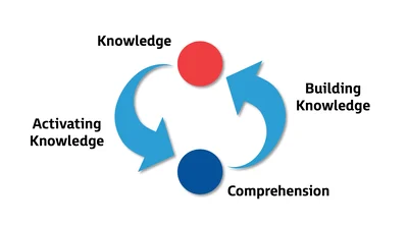
CompToolkit_2024_NTL_Cycle-of-Knowledge-Building-Blog_Graphic1. Adapted from Cervetti, Jaynes, and Hiebert (2009)
As this figure illustrates, knowledge building is a reciprocal process. As students build their knowledge through reading and thinking, they create a foundation that in turn supports ongoing learning and understanding. P. David Pearson (1996) calls this a “virtuous cycle.”
Dr Arthur Costa says, “The deeper the knowledge one has, the more analytical, experimental and creative one’s thought processes.” Comprehension skills, such as analyzing, inferring, questioning and synthesizing information, enable students to delve deeper into the content. In return, the more content knowledge students acquire, the more background knowledge they have for understanding new information. It’s a reinforcing cycle where skills and knowledge continually enhance each other.
Stephanie Harvey and Anne Goudvis

Want to learn more about reaching all learners through comprehension and knowledge building in the classroom?
Join us for the Summer Literacy Institute featuring Stephanie Harvey and Lesley University Literacy Trainers to learn how to build every students’ content knowledge, vocabulary, and passion for reading and writing.